John Norman Miksic 1946-2025
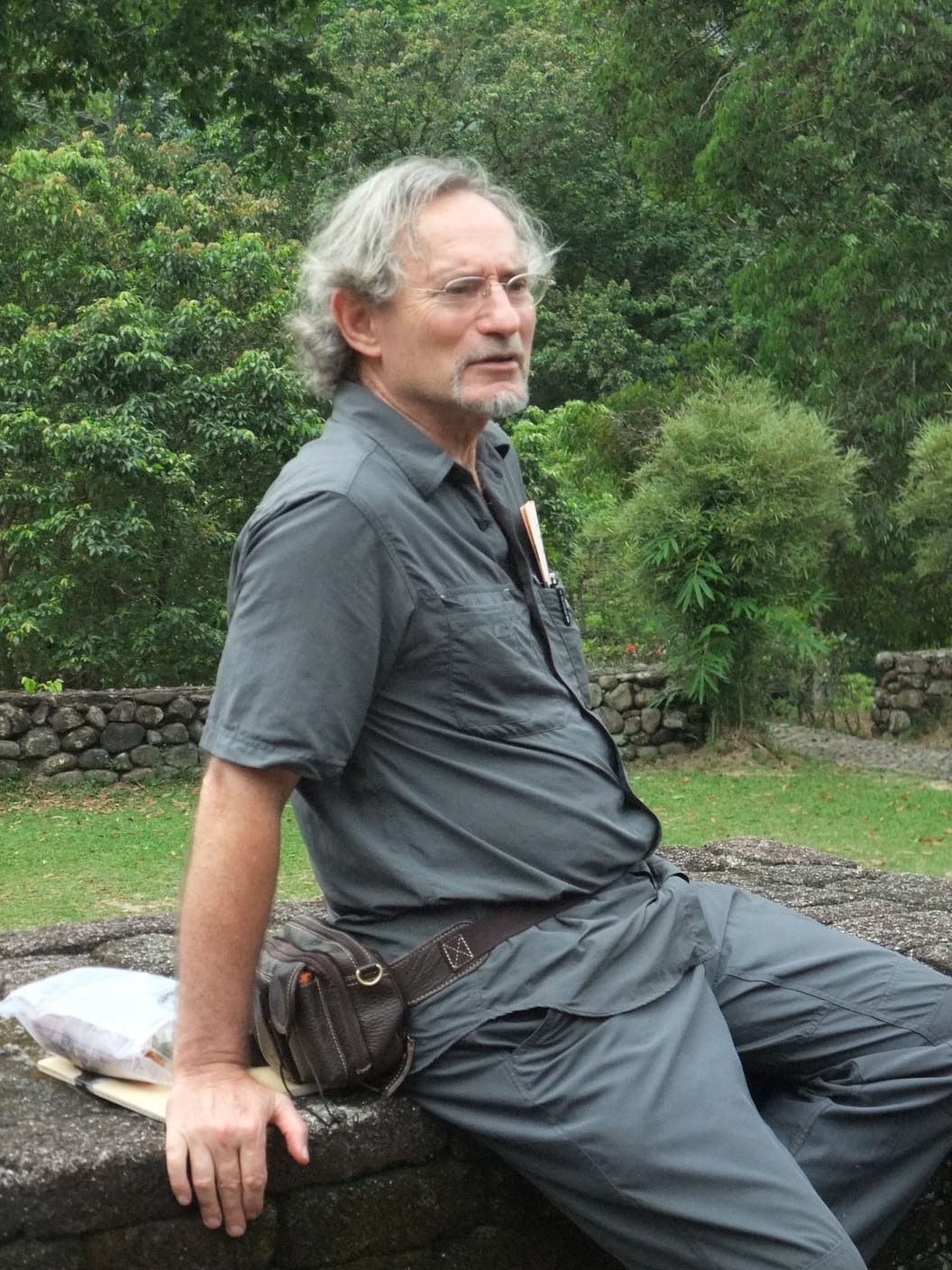
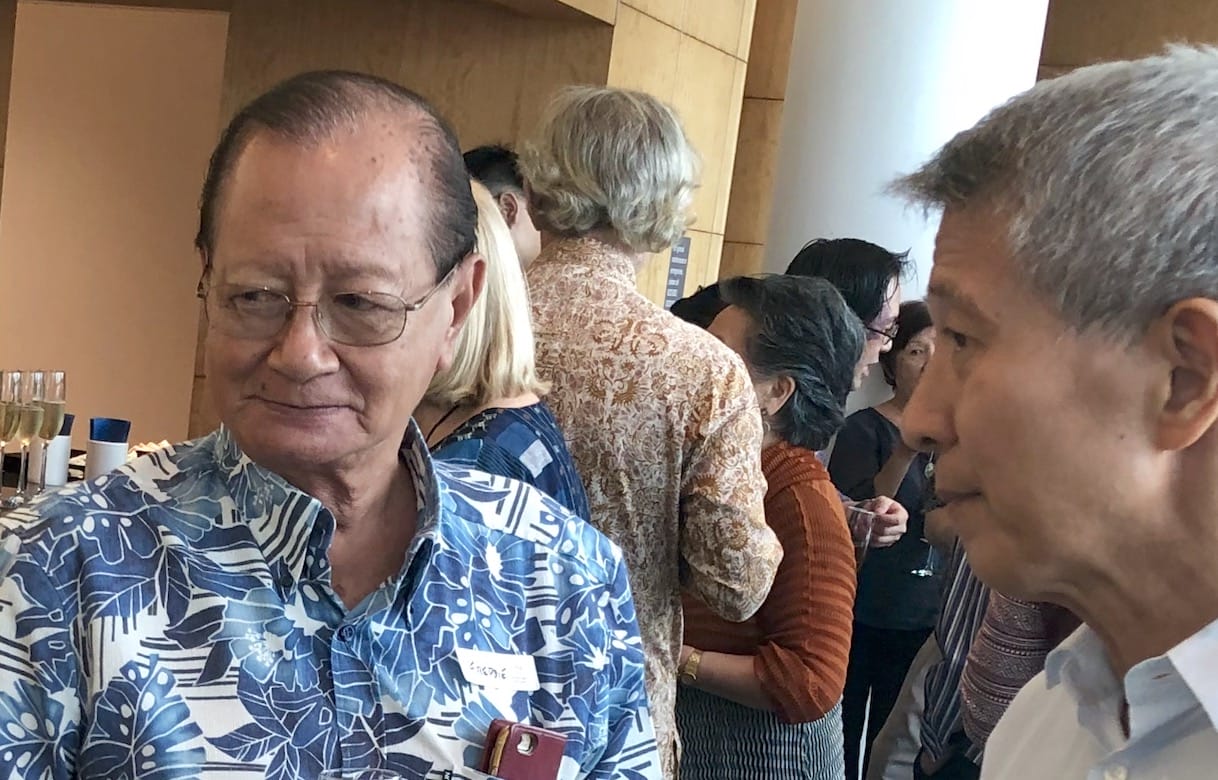
John Miksic
Archaeologist John Miksic
John Norman Miksic, the “Indiana Jones” of Singapore Archaeology, former SEACS President, and beloved advisor, professor and friend, died on October 25, aged 79.
He never thought of archaeologically investigating Fort Canning until the invitation to do so came from the old National Museum in 1983. He was focused on Indonesian archaeology, having excavated port settlements along the Deli River valley in northeast Sumatra and submitted a doctoral thesis on his excavations to Cornell University’s Department of Anthropology which won the Lauriston Sharp Prize for best doctoral thesis in 1979.
John Norman Miksic however, accepted the Invitation to archaeologically investigate Fort Canning and, against the odds, in a ten-day investigation of the top of Fort Canning from 18 to 28 January 1984 recovered in situ 1,346 pottery shards weighing a total of 14.31 kilograms that could be dated to the fourteenth century. The report he produced of his ten-day investigations set the standard on the conduct and reporting of future archaeological excavations in Singapore.
Both Stamford Raffles and Dr John Crawfurd, the Second Resident of Singapore, reported remains of an ancient settlement on Fort Canning. But the summit of Fort Canning had been levelled and excavated three times in the intervening one-hundred and sixty five years since, and as such, it was hoping against hope that there might be still some intact artefacts buried on the hill confirming the Sulalat al-Salatin or ‘Malay Annals’ stories that Fort Canning was the seat of government of Sang Nila Utama or Sri Tribuana. His successful finds stimulated public interest in the potential for archaeology to recover more about Singapore’s deep past. The National Parks Board offered him a consultancy on further archaeological investigations and the History Department at the National University of Singapore recruited him to its staff in 1987. In 1991 he joined the newly-formed Southeast Asian Studies Programme which became the Department of Southeast Asian Studies where he remained until he retired as Emeritus Professor in 2019.
His interest in archaeology dates back to his undergraduate student days at Darthmouth College where he graduated in anthropology in 1968. He then served as a Peace Corps volunteer in Malaysia from 1968 to 1972 where he helped set up a farmers’ cooperative and developed an irrigation system in the Bujang Valley in Kedah, before returning to the U.S. to earn an M.A. from the Department of International Affairs, Ohio University (Athens, Ohio) in 1974. It was at Bujang valley where he became aware and developed an interest in the early history of Southeast Asia. This led him to work for another MA and PhD in the Department of Anthropology at Cornell University. Upon graduation in 1979 he accepted a job as a Rural Development Planning and Management Advisor in Bengkulu, Sumatra, under a USAID project. As John says, he has had two career lines. One has been as a rural development adviser, the other as an archaeologist.
It was the archaeologist which won, when in 1981 he moved to Gadjah Mada University, where he joined the Department of Archaeology with support from the Ford Foundation, and the Asian Cultural Council. The invitation to relocate to Singapore in 1987 came at a fortuitous time when his program to teach at Gadjah Mada University was ending. From 1988 onwards, he participated in every major archaeological excavation on Fort Canning and its environs to check if there were any fourteenth-century artefacts before the area was re-developed. He was asked to check the site of the new Parliament House Complex before its construction in late 1994 (and sought and received support funding from American Express for the project), and at Empress Place in 1998 before its restoration as the Asian Civilisations Museum. In early 2003, the Singapore Cricket Club allowed him to excavate a corner of its cricket pitch. The artefacts recovered confirmed the Padang as a potentially large archaeological site. St. Andrew’s Cathedral also allowed him to excavate its grounds in late 2003 before the construction of an extension to the cathedral.
All these excavations were done with volunteers from not only university undergraduates to junior college students and Friends of the Museum (FOM) and a widening circle of Singaporeans just interested in recovering Singapore’s deep past. Somehow, he managed to persuade these volunteers that slowly brushing away the soil on Fort Canning to reveal the fragment of a Ming dynasty jar could be therapeutic and exhilarating. He mentored his volunteers to collect everything they unearthed, whether it be the fragment of a Ming vase or local earthenware pot, and record exactly where they excavated it. He got the volunteers to then shift the soil they had brushed and check if there were other artefacts they missed seeing. They recovered tiny minute glass beads and fragments of glass bangles from this shifting of soil which provided us a detailed view of life on fourteenth-century Fort Canning that would otherwise have been lost. In 1997, he moved a large pile of artefacts he had accumulated into the then Singapore History Museum for an exhibition he co-curated audaciously titled “Singapore’s 700th Anniversary.”
He carefully stored the accumulating tons of artefacts excavated in storerooms in the old British military building on Fort Canning, which he persuaded the National Parks Board, supporting his work, to open up for him. And he got more volunteers to slowly wash and sort out tons of artefacts recovered. When the storage space on Fort Canning ran out, he got the Department of Southeast Asian Studies to take over an old bungalow for staff from the University that he proudly converted into the ‘Kent Ridge Archaeological Lab’. Here he continued to persuade students and others to volunteer to slowly clean and sort tons of artefacts. He carefully carried these with him to Nanyang Technological University where he was offered a fellowship after his retirement from the National University of Singapore as an emeritus professor.
He was the founding Head of the Archaeological Unit to support the work of the old Nalanda-Srivijaya Centre at the ISEAS-Yusof Ishak Institute on Southeast Asia’s historical interactions between South and East Asia. He summed his forty years of archaeological research on Singapore which established fourteenth-century Temasek as the best archaeologically documented port-settlement in the Straits of Melaka in his book Singapore and the Silk Road of the Sea, 1300-1800, The book won the inaugural Singapore History Prize in 2018 and is the standard reference on archaeology in Singapore.
For his stellar services to furthering archaeology in Singapore, he was awarded the Public Service Medal (Pingat Bakti Masyarakat) in the 2023 National Day awards for not only his academic contributions, but also his role in fostering public appreciation for Singapore’s deep historical roots. The citation reads in part, that “His work has helped integrate archaeology into national narratives and museum exhibitions, influencing both scholarship and heritage policy.”
It was not only in Singapore that his yeomen service to archaeology and heritage was recognized. The Indonesian ‘National Archaeology Research Centre” acknowledge his contribution to the development of Indonesian archaeology, also the National Museum for the catalogues he edited of their collections. From the Sultan of Solo he received a royal title for his work in cataloguing the collections of the palace. He was invited to serve on the board of the Center for Khmer Studies in Cambodia from 2000 until 2016, advising them on their research projects at Angkor. He was, with Professor Goh Geok Yian, running a series of workshops in Bagan on archaeology and cultural resource management during the years when Myanmar was open to foreign scholars.
The Southeast Asian Ceramic Society recognized his talents and co-opted him into the Society’s council shortly after he joined the Society in 1987. He remained a long-serving member of the Society’s Council for the next quarter of a century and was serving as its President before ill-health forced him to step down. He was the driving force behind a number of the Society’s exhibitions, especially its major fortieth anniversary exhibition on Southeast Asian Ceramics (“New Light on Old Pottery”) and the benchmark catalogue he edited on the exhibition.
He continued to read and write until the last weeks of his life. He was correcting the proofs of the proceedings of the conference he convened for the Department of Southeast Asian Studies in 2019 on “Archaeology and the Seas, 400 BCE – 1600 CE, Singapore Before Raffles” and hoping to finalise another site report on one of his excavations on or around Fort Canning for the NUS Press online Southeast Asian Site Reports at epress.nus.edu.sg/sitereports. He was committed to archaeology to the end. His legacy is not just in what he unearthed, but in how he transformed Singapore’s historical consciousness, proving that archaeology could speak powerfully to national identity.
As a member of SEACS, he was very generous with sharing his knowledge in giving the Society talks and arranging and leading numerous visits to the Bujang Valley in Malaysia, as well as sites in Indonesia including the archaeological sites on the Dieng Plateau and Central Java, remains of the Majapahit Kingdom, the Borobudur and Prambanan temples, the Pagan temples in Myanmar, and various kiln sites throughout the region. He was a true mentor to our members and shall be very sorely missed.
— text by Kwa Chong Guan, President SEACS, and members of the SEACS Council
The National library Board has published a full memorial to Professor Miksic that can be accessed here.